

Orthopedic dog bed or designer bed: which does your dog really need? Whether you're searching for a dog bed ortho, an orthopaedic dog bed or the best orthopedic beds for dogs, the label matters less than you might think. Our honest guide explains what "orthopedic" actually means, which dogs genuinely benefit from one, and what makes any bed supportive. It covers the right size, filling that doesn't bottom out, a raised edge to rest their head on, and a design you'll be happy to keep in the living room. That's about 90 words. If your theme shows only a set number of characters on the blog listing page, I can cut it down to a shorter version.
Orthopedic vs. Supportive Dog Beds: What Actually Matters
Search for a new dog bed and "orthopedic" appears on almost everything. Some dogs genuinely need an orthopedic bed — and many simply need a well-made, well-sized bed they'll actually sleep in. Here's an honest look at the difference, so you can work out which one your dog needs.
What "orthopedic" actually means on a dog bed
An orthopedic dog bed (or orthopaedic dog bed, as it's often spelt in Australia and the UK — they mean the same thing) is designed to spread your dog's weight evenly and take pressure off their joints. That usually means a thick layer of memory foam or high-density foam that holds its shape rather than flattening under a heavier dog.
The catch is that there's no single standard for what earns the label. One brand's "ortho" bed might have several centimetres of dense foam; another might have a thin foam layer on top of ordinary filling. So when you're comparing orthopedic beds for dogs, look at what's inside and how thick it is rather than the word on the packaging.
Who genuinely needs an orthopaedic dog bed
Dedicated orthopedic support is worth prioritising if your dog:
- Has been diagnosed with arthritis, hip or elbow dysplasia, or another joint condition
- Is a senior and has become stiff getting up, or hesitates before lying down
- Is recovering from surgery or an injury and your vet has recommended firmer support
- Is a giant or very heavy breed that flattens softer beds quickly
If your dog fits one of those descriptions, a purpose-built orthopedic dog bed is the right call, and your vet can advise on the level of support they need. Choosing a bed on looks alone isn't worth it for a dog in pain.
For a healthy young or adult dog, though, "orthopedic" is often more reassurance than necessity. What matters more is whether the bed fits them, supports them evenly, and gets used every day.
What makes any dog bed supportive
Whether or not a bed carries an orthopedic label, these are the things that decide how comfortable it really is.
It doesn't bottom out. Press your palm firmly into the centre of the bed. If you can feel the floor, a heavier dog will too.
It's the right size. A bed that's too small forces your dog to curl up whether they want to or not. Measure your dog fully stretched out, nose to tail, and choose a bed that comfortably exceeds that length.
It has somewhere to rest their head. A raised edge or bolster gives dogs a natural pillow and something to lean against, which many dogs love for settled, curled-up sleep.
It stays put. A bed that slides on floorboards or tiles every time your dog jumps in is harder on their body and less inviting to use.
It's easy to keep clean. A removable, washable cover and a liner that stops spills reaching the filling keep the bed fresh — and a fresh bed is one your dog will keep choosing.
Where design comes in
Here's the part most comparisons skip: the most supportive bed in the world doesn't help if it's tucked away in the laundry because it doesn't suit the living room. Dogs want to sleep where their people are. A bed you're happy to have on show can sit in the spot your dog already chooses — and that's what gets it used every day.
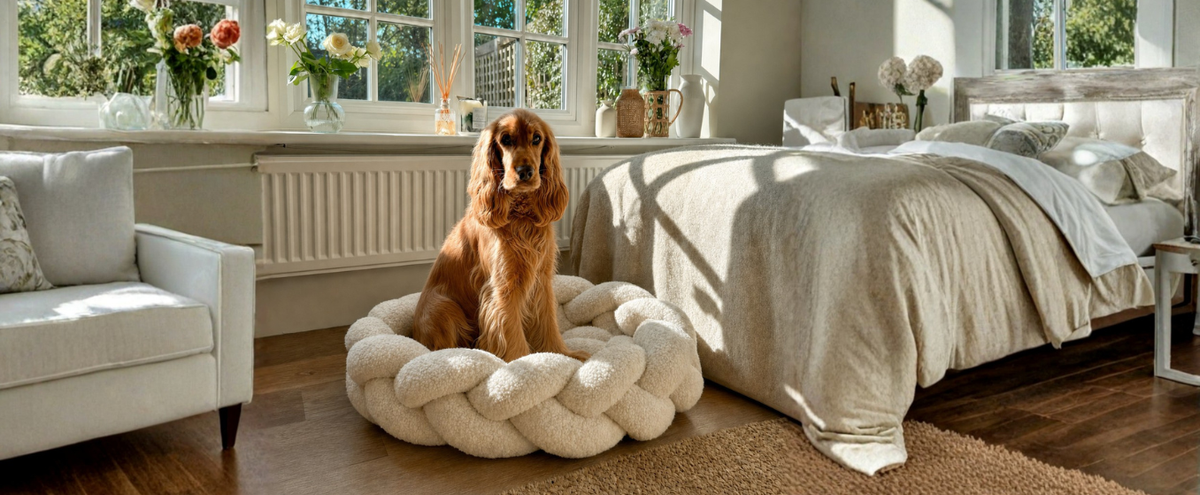
That's the thinking behind The Hersh Bed. We don't market our beds as orthopedic, because we'd rather be straight with you about what they are. Each one pairs a cushioned inner mattress and a thick, soft teddy sleeping surface with a raised braided surround your dog can rest their head against.

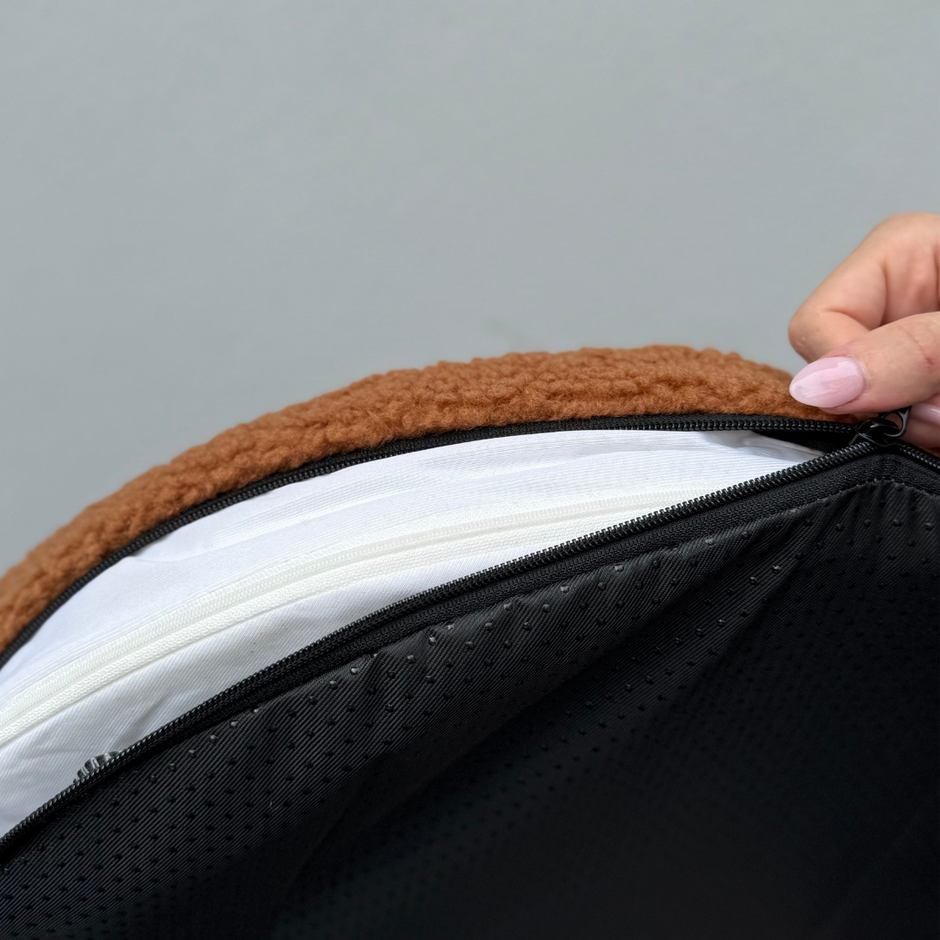
Underneath, a waterproof liner protects the mattress from spills and muddy paws, a non-slip base keeps the bed steady on hard floors, and the inner cover unzips for a low-temperature machine wash. Every bed comes in Medium (70cm) and Large (100cm).
Explore supportive bed designs
So which should you choose?
Choose an orthopedic dog bed if your dog has a diagnosed joint condition, is noticeably stiff with age, or your vet has recommended firmer support.
Choose a well-made designer bed if your dog is healthy and you want a bed that's comfortable, easy to clean and good enough to keep in the room where your dog actually wants to be.
Either way, get the size right, check the bed doesn't flatten under your dog's weight, and put it where your dog already likes to sleep.
Quick answers
Is orthopedic the same as orthopaedic?
Yes. "Orthopedic" is the American spelling and "orthopaedic" is the Australian and British spelling. Whether you search for a dog bed ortho, an orthopedic dog bed or an orthopaedic dog bed, you're looking at the same category.
Are orthopedic beds for dogs worth it for a young, healthy dog?
They're not harmful, but they're not essential either. For a healthy dog, a bed that fits well, doesn't sink to the floor and gives them an edge to rest against will cover most of what they need.
How do I know if my dog is outgrowing their current bed?
Watch how they sleep. If their legs or head regularly hang over the edge, or they only ever sleep tightly curled, the bed is probably too small. If you can feel the floor through the middle, the filling has had its day.
Looking for a comfortable bed your dog will use and you'll be happy to keep on show? Explore our beds in Medium and Large, with free 14-day returns if the fit isn't right.